Sauber
Die antimikrobiellen Vorhänge von ELERS MEDICAL werden mit einem bewährten antimikrobiellen Zusatz hergestellt, der in die Fasern eingearbeitet ist und hilft, die Bakterienlast auf der Stoffoberfläche zu verringern. Der Vorhangstoff hat sich gegen zahlreiche Organismen wie MRSA, Staphylococcus aureus, Klebsiella pneumoniae und Escherichia coli als wirksam erwiesen, und die Wirksamkeit der Vorhänge wurde unabhängig nach der international anerkannten Norm für antimikrobielle Textilien ISO 20743:2021 geprüft. Komplettes Sortiment
Sowohl antimikrobielle als auch Standardvorhänge (unbehandelt) sind in einer großen Auswahl an Größen und Farben erhältlich. Nachhaltige Entwicklung fördern Keine zeitaufwendigen Waschprozesse mehr, die Wasser und Waschmittel verbrauchen.
Die Wissenschaft hinter Krankenhausvorhängen: 14 veröffentlichte Studien
Sicher
Sicherer für Patienten, Personal und Besucher. Die Vorhänge erfüllen die Vorschriften von REACH und ECHA und sind dort sowie bei der EPA in den USA registriert. Hergestellt unter dem zertifizierten Qualitätsmanagementsystem ISO 9001:2015 und dem Umweltmanagementsystem ISO 14001:2015.
Einfacher und schneller Austausch
Einwegvorhänge verbessern die Krankenhaushygiene ohne Waschprozesse und sparen Zeit und Ressourcen. Eine große Auswahl an Aufhängesystemen ist erhältlich, kompatibel mit den meisten gängigen Schienensystemen.
Wirtschaftliche Lösung
Einwegvorhänge werden ausgetauscht statt gewaschen, daher entfällt das Waschen, Trocknen und Lagern wiederverwendbarer Vorhänge.
Kosteneffizient
Keine Wäscherei und keine kostspieligen Anfangsinvestitionen. Erhebliche Kosteneinsparungen gegenüber herkömmlichen Textilvorhängen.
Internationale Zulassungen für Flammschutz (FR)
Sowohl die antimikrobiellen als auch die Standard-Patientenvorhänge sind materialbedingt flammgeschützt (FR), und ihre flammhemmenden Eigenschaften bleiben während des gesamten Lebenszyklus der Produkte unverändert. Die FR-Eigenschaften wurden nach den Normen EN 13773, BS 5867: Part 2 Type C und NFPA 701 geprüft.
Einfache Rückverfolgung
Heißversiegelte Etiketten zur Selbstkontrolle und Kennzeichnung mit einer eindeutigen Identifikationsnummer für die Rückverfolgbarkeit.
Recycelbar und umweltfreundlich
Wir verwenden bei der Herstellung 10 bis 20 % recycelte Materialien, und nach seiner Lebensdauer kann das Produkt zu bis zu 100 % recycelt werden.
Krankenhäuser und Kliniken Gesundheitseinrichtungen und Ambulanzen Pflegeheime und betreutes Wohnen Operationssäle und Infektionsstationen
Benötigen Sie auch eine freistehende oder wandmontierte Lösung? Sehen Sie sich unsere fahrbaren und wandmontierten Paravents an.
Vorhangsortiment
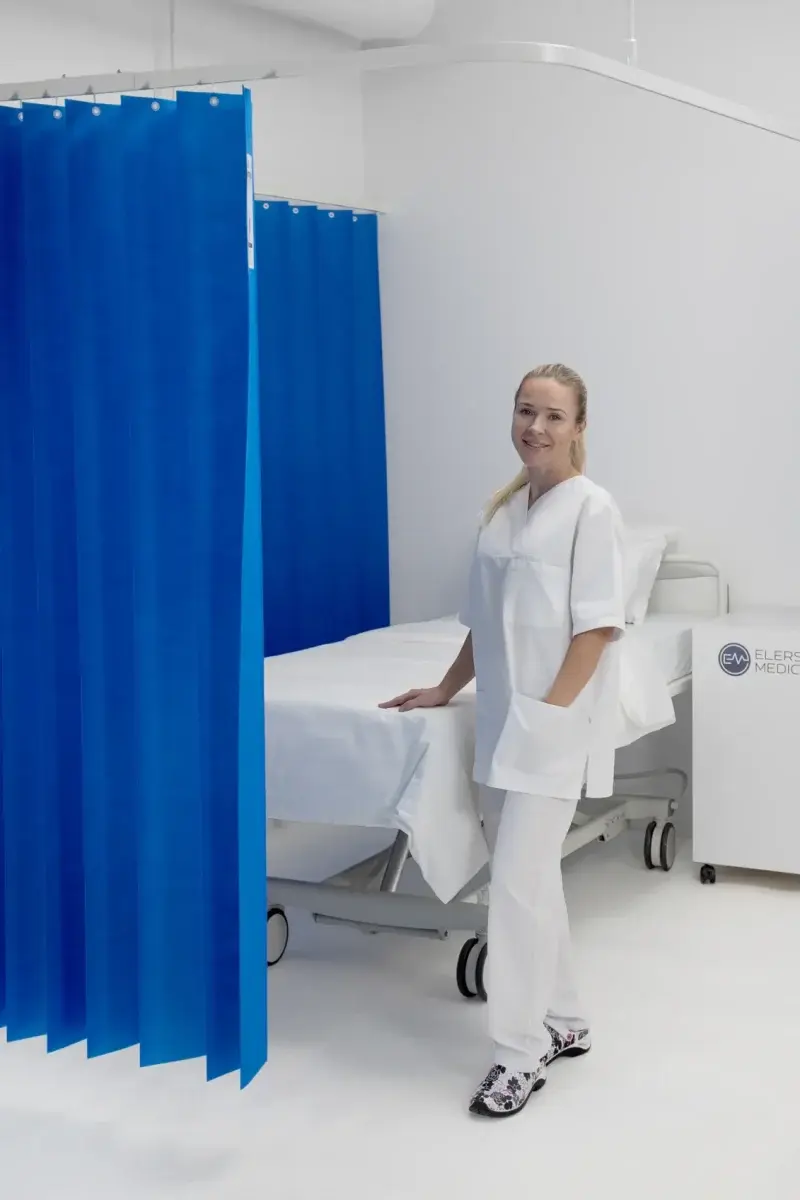
Die Patientenvorhänge von ELERS MEDICAL® sind mit antimikrobiellen Eigenschaften oder als Standardvorhänge ohne antimikrobielle Behandlung erhältlich. Beide Varianten haben über ihren gesamten Lebenszyklus dieselben flammhemmenden Eigenschaften. Die Vorhänge gibt es in vielen Größen, Zuschnitten und Farben, Sonderanfertigungen sind auf Anfrage erhältlich.
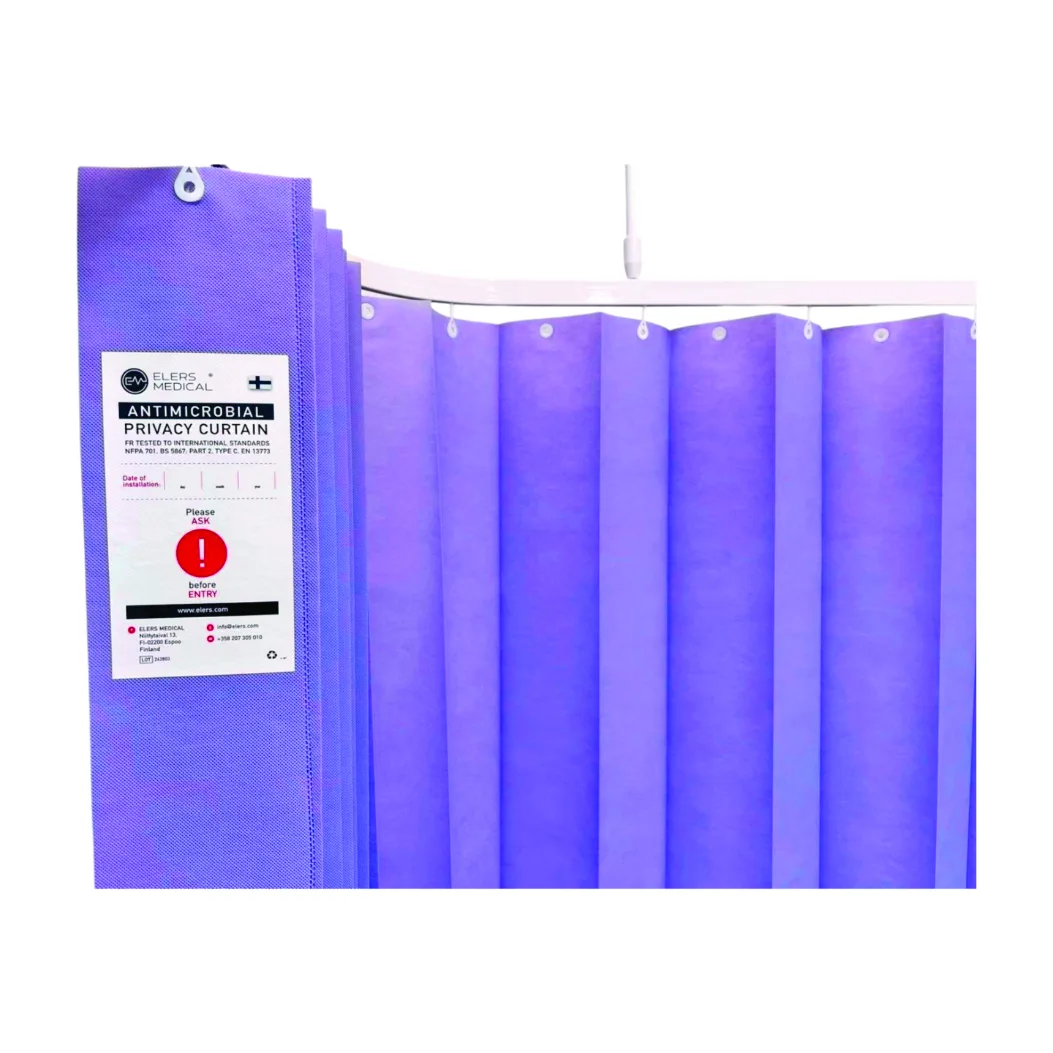
Für Bereiche, in denen die Patientensicherheit an erster Stelle steht. Der antimikrobielle Schutz wird bereits bei der Herstellung in den Vliesstoff eingearbeitet, und das Material ist nach ISO 20743:2021 gegen MRSA und andere Organismen über den gesamten Lebenszyklus des Vorhangs geprüft.
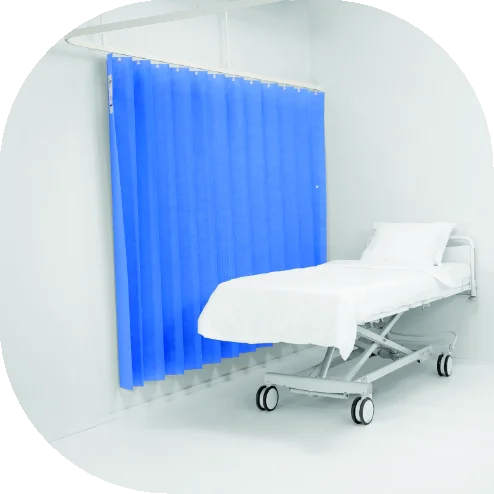
Ein kostengünstiger Vorhang für Bereiche mit geringerem Risiko und hohem Patientenwechsel. Gleiche Größen, Farben und Brandeigenschaften wie der antimikrobielle Vorhang.
Vollflächiger Vorhang ohne Ausschnitte oder Netzeinsätze. 11 Farben und das Ballonmuster, alle als antimikrobielle und Standardvariante erhältlich.
Die Perforation lässt die Luft um den Bettplatz zirkulieren und ermöglicht die Funktion deckenmontierter Sprinkleranlagen. Als antimikrobielle und Standardvariante erhältlich.
Die richtige Wahl für deckenmontierte Schienen. Als antimikrobielle und Standardvariante erhältlich.
Entworfen und entwickelt von ELERS MEDICAL in Finnland.
Standardfarben und Druckmuster
Jede Farbe und der Ballondruck sind als antimikrobielle und Standardvorhänge in vollflächiger und perforierter Ausführung sowie mit Netzoberteil erhältlich. Individuelle Farben und Drucke sind erhältlich; es gelten Mindestbestellmengen.
Die auf dem Bildschirm gezeigten Farben sind Richtwerte. Fordern Sie vor der Bestellung ein Stoffmuster an.
Hakenübersicht
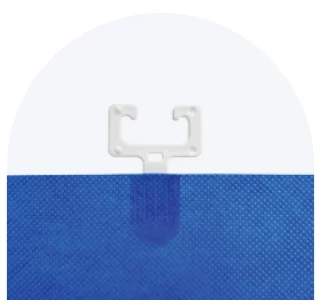
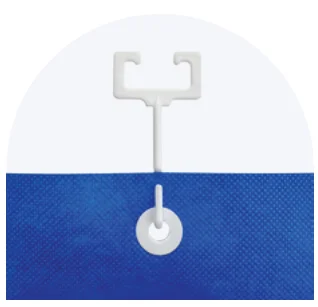
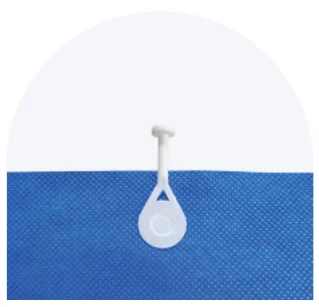
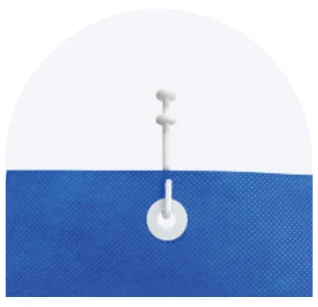
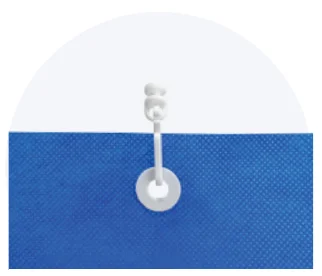
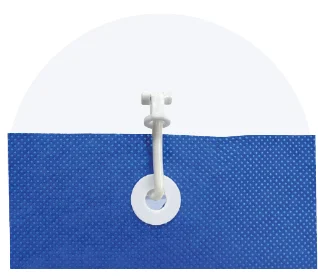
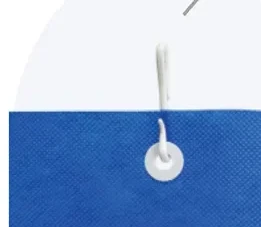
Die Vorhänge von ELERS MEDICAL sind mit den meisten gängigen Vorhangschienen im Gesundheitswesen kompatibel und können entweder mit Haken oder nur mit Ösen geliefert werden. Unsere Auswahl ermöglicht eine nahtlose Integration in vorhandene Haken- und Gleitersysteme. Sie sind nicht sicher, was Sie benötigen? Senden Sie uns Hersteller und Modell der Schiene oder ein Foto der Schiene und des aktuellen Hakens.
Größen und Verpackung
Messen Sie die Länge der Schiene, die der Vorhang abdecken soll, und wählen Sie den Vorhang, dessen Nutzbreite dazu passt. Die Nutzbreite berücksichtigt die Falten des aufgehängten Vorhangs.
| Breite \ Höhe | 2,0 m | 2,2 m | 2,4 m | 2,5 m | 2,6 m |
|---|---|---|---|---|---|
| 1.95 | 18 | 16 | 15 | 14 | 14 |
| 2.40 | 14 | 13 | 12 | 11 | 11 |
| 2.55 | 14 | 13 | 11 | 10 | 9 |
| 3.60 | 12 | 11 | 10 | 10 | 9 |
| 3.75 | 12 | 11 | 10 | 10 | 9 |
| 4.20 | 10 | 9 | 8 | 8 | 8 |
| 4.50 | 9 | 8 | 8 | 7 | 7 |
| 5.55 | 8 | 7 | 7 | 6 | 6 |
| 7.20 | 6 | 6 | 5 | 5 | 5 |
| 7.50 | 6 | 5 | 4 | 4 | 4 |
| Vorhangbreite (m) | Nutzbreite ca. (m) |
|---|---|
| 1.95 | 1.55 |
| 2.40 | 1.80 |
| 2.55 | 2.05 |
| 3.60 | 2.80 |
| 3.75 | 2.90 |
| 4.20 | 3.40 |
| 4.50 | 3.60 |
| 5.55 | 4.30 |
| 7.20 | 5.60 |
| 7.50 | 5.75 |
Weitere Sonderhöhen auf Anfrage. Kartongewicht ca. 10,5 kg. Kartonmaße 120 × 16,5 × 40 cm.
Montageanleitung
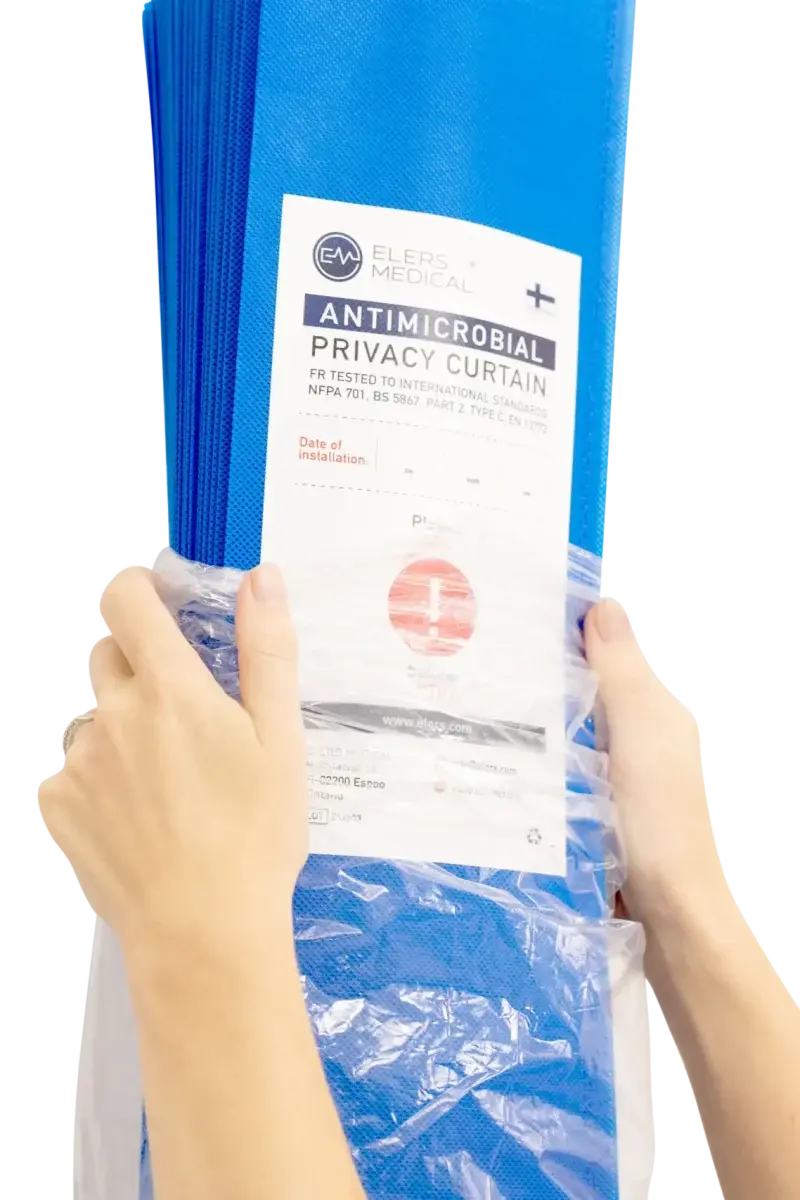
Ziehen Sie die Kunststoffhülle herunter, um das Etikett zur Selbstkontrolle freizulegen, und tragen Sie das Montagedatum ein.
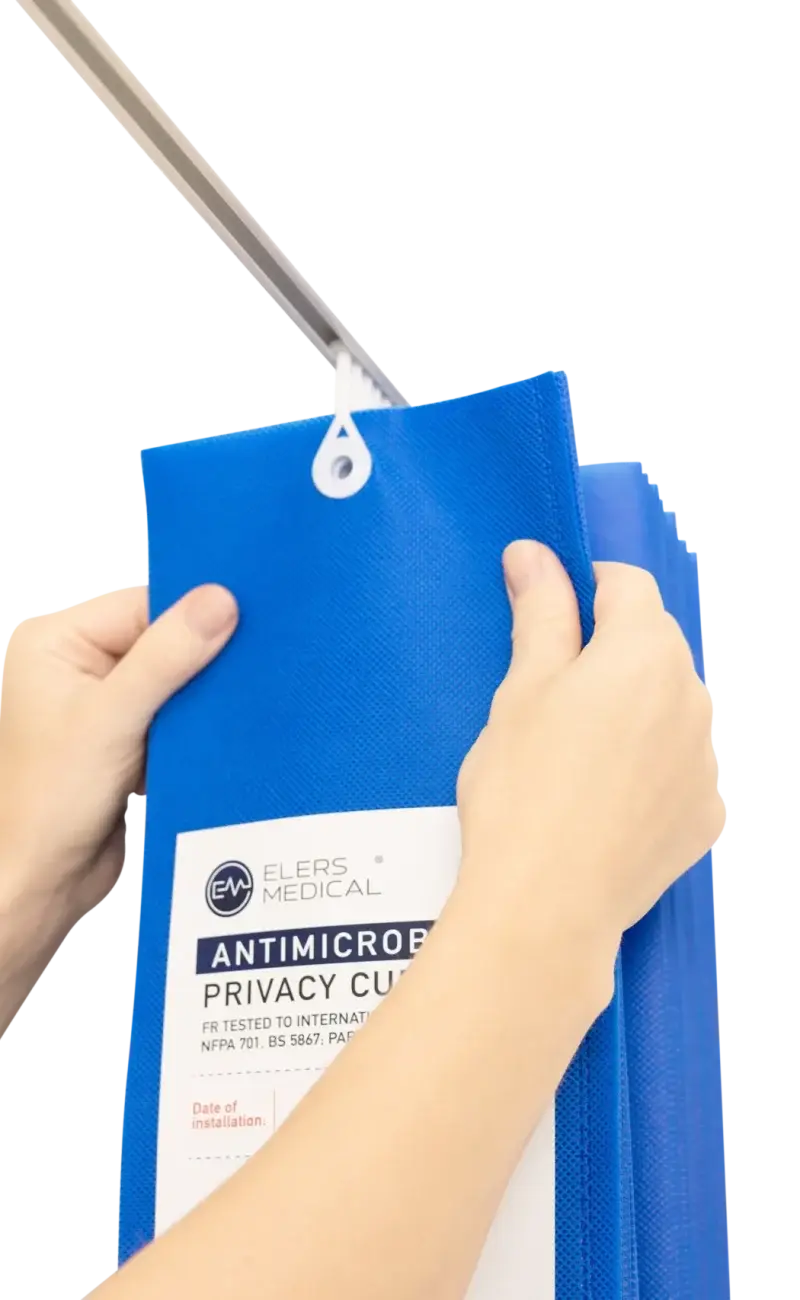
Setzen Sie die Haken direkt in die Schiene. Die Vorhänge werden nach Ihren Anforderungen mit Haken oder nur mit Ösen geliefert.
Entfernen Sie die Kunststoffhülle vollständig, sobald der Vorhang aufgehängt ist.
Lagern Sie die Vorhänge trocken bei normaler Raumtemperatur und stellen Sie den Karton aufrecht.
Wir empfehlen, die Vorhänge alle 6 bis 12 Monate auszutauschen oder sofort, wenn sie sichtbar verschmutzt oder kontaminiert sind. Den endgültigen Zeitplan bestimmen die Richtlinien Ihres Krankenhauses.
Der Vorhangstoff besteht aus Polypropylen (PP), Haken und Ösen sind aus Kunststoff. Die Vorhänge können gemäß den örtlichen Krankenhausvorgaben recycelt oder entsorgt werden.
Unabhängig geprüft
Nach ISO 20743:2021 geprüft, reduziert das antimikrobielle Vorhangmaterial eine Vielzahl von Krankheitserregern um mehr als log 3 (99,9 %).
Weitere Prüfungen auf Anfrage.
Antibakterieller Wert (A): 2 ≤ A < 3 signifikant, A ≥ 3 stark. Prüfungen unter Laborbedingungen durchgeführt. Vollständige Prüfergebnisse auf Anfrage.
Schwer entflammbar über die gesamte Lebensdauer des Vorhangs.
Veröffentlichte Forschung
Trennvorhänge werden ständig berührt und selten gewechselt. Diese begutachteten Studien zeigen, wie schnell gewöhnliche Vorhänge kontaminiert werden und was silberbasierte antimikrobielle Materialien dagegen bewirken.
“By day 3, test curtains showed increased microbial contamination (mean colony-forming units [CFU]/cm2 = 1.17) compared to control curtains (mean CFU/cm2 = 0.19). Test curtains became increasingly contaminated over time, with mean CFU/cm2 for days 17 and 21 of 1.86 and 5.11, respectively. By day 10, 1/8 test curtains tested positive for MRSA, and 5/8 were positive by day 14. Patient privacy curtains became progressively contaminated with bacteria, including MRSA. Between days 10 and 14 after being hung, curtains showed increased MRSA positivity. This may represent an opportune time to intervene, either by cleaning or replacing the curtains.”
“There was a statistically significant difference for the contact (t = 2.10, P =.047) and noncontact (t = 2.62, P =.016) rooms, with the edges having a significantly higher median than the middles. Pathogens such as methicillin-resistant Staphylococcus aureus, Enterococcus, Klebsiella, and Acinetobacter were found on the curtains, though at lower rates than in previous studies. Opportunistic fungi were also found on all curtains. Conclusions: Results of this study confirm that hospital curtains, most notably the edge but also the middle, are contaminated with pathogens, and that these areas are frequently touched by health care workers in between hand hygiene.”
“The cumulative contamination rate of the hospital privacy curtains increased over time (week 2: 15.6%, week 4: 37.0%, and week 8: 55%). Methicillin-resistant Staphylococcus aureus was not isolated from either the control or the hospital curtains during the study period. Vancomycin-resistant enterococci was not isolated from the control curtains but was isolated from 11.8% (4/34) of the hospital curtains. The contamination rate of the hospital curtains increased over time and showed a tendency to rise with an increase in the number of beds in a room.”
“Participants hands were heavily contaminated at baseline, in some cases with potentially pathogenic species. Half of the participants (n=30) acquired bacteria on their fingertips from handling curtains, illustrating that privacy curtains may be involved in the transmission of infection to emergency department patients.”
“In a culture survey (n=50), we found that 42% of hospital privacy curtains were contaminated with a antibiotic-resistant enterococci, 22% with methicillin-resistant Staphylococcus aureus, and 4% with Clostridium difficile. Hand imprint cultures demonstrated that these pathogens were easily acquired on hands. Hospital curtains are a potential source for dissemination of healthcare-associated pathogens.”
“From 32 curtains sampled, a total of 59 isolations were obtained, from those, 47 (79.6%) were considered potentially clinically relevant (Table 2), highlighting bacteria as Methicillin-resistant S. haemolyticus (MRSH), Methicillin-resistant S. cohnii (MRSC), MRSE, Methicillin-resistant S. saprophyticus (MRSS), Moraxella sp., Acinetobacter ursingii, AMP-C producer Pseudomonas oryzihabitans, Pantoea agglomerans, and Sphingomonas paucimobilis… There are significant opportunities to reduce patient exposure to frequently pathogenic bacteria in the hospital setting; patients are likely exposed to many bacteria through direct contact with white coats, curtains, and ties.”
“Twelve of 13 curtains (92%) placed during the study showed contamination within 1 week. Forty-one of 43 curtains (95%) demonstrated contamination on at least 1 occasion, including 21% with MRSA and 42% with VRE. Eight curtains yielded VRE at multiple time points: 3 with persistence of a single isolate type and 5 with different types, suggesting frequent recontamination. Privacy curtains are rapidly contaminated with potentially pathogenic bacteria.”
“Privacy curtain contamination on the burns/plastic surgery ward was determined for two separate occasions six months apart: 23 curtains on August 2015 and 26 curtains on January 2016… Curtain contamination in August 2015 was 0.7–4.7 cfu/cm2 with 22% testing positive for MRSA, whereas contamination on January 2016 was 0.6–13.3 cfu/cm2 with 31% of curtains testing positive for MRSA. Curtains on the burns/plastic surgery ward become colonized with significant quantities of bacteria.”
“Environmental screening revealed the presence of the multiple-resistant Acinetobacter species on fomite surfaces in the intensive care unit and bed linen. The major source appeared to be the curtains surrounding patients' beds. Typing by pulsed field gel electrophoresis demonstrated that the patients' isolates and those from the environment were indistinguishable… This outbreak also highlights environmental sources, particularly dry fabrics such as curtains, as an important reservoir for dissemination of acinetobacters.”
“The purpose of this study was to determine the survival of 22 gram-positive bacteria (vancomycin-sensitive and -resistant enterococci and methicillin-sensitive and -resistant staphylococci) on five common hospital materials: smooth 100% cotton (clothing), 100% cotton terry (towels), 60% cotton–40% polyester blend (scrub suits and lab coats), 100% polyester (privacy drapes), and 100% polypropylene plastic (splash aprons)… All isolates survived for at least 1 day, and some survived for more than 90 days on the various materials… The long survival of these bacteria, including MRSA and VRE, on commonly used hospital fabrics, such as scrub suits, lab coats, and hospital privacy drapes, underscores the need for meticulous contact control procedures and careful disinfection to limit the spread of these bacteria.”
“Curtains in the experimental group demonstrated significantly lower bacterial contamination than controls at all time points (P < .001). Peak contamination in the control group reached 2.1 CFU/cm² at day 30, whereas experimental curtains maintained contamination below 0.2 CFU/cm² throughout. Cost analysis revealed a 59.42% reduction in cumulative curtain-related expenditures in the experimental group. Antimicrobial disposable curtains offer superior microbial control and substantial cost savings. Integration of such curtains into infection prevention protocols may enhance environmental hygiene and resource optimization in critical care settings.”
“Bacteria were exposed to the silver ion solution for various lengths of time, and the antibacterial effect of the solution was tested… Reductions of more than 5 log10 CFU/ml of both S. aureus and E. coli bacteria were confirmed after 90 min of treatment with the silver ion solution. Significant reduction of S. aureus and E. coli cells was also observed by FC analysis… In conclusion, the results of the present study suggest that silver ions may cause S. aureus and E. coli bacteria to reach an ABNC state and eventually die.”
“A declining pipeline of clinically useful antibiotics has made it imperative to develop more effective antimicrobial therapies, particularly against difficult-to-treat Gram-negative pathogens. Silver has been used as an antimicrobial since antiquity, yet its mechanism of action remains unclear. We show that silver disrupts multiple bacterial cellular processes, including disulfide bond formation, metabolism, and iron homeostasis. These changes lead to increased production of reactive oxygen species and increased membrane permeability of Gram-negative bacteria that can potentiate the activity of a broad range of antibiotics against Gram-negative bacteria in different metabolic states, as well as restore antibiotic susceptibility to a resistant bacterial strain… This work shows that silver can be used to enhance the action of existing antibiotics against Gram-negative bacteria, thus strengthening the antibiotic arsenal for fighting bacterial infections.”
“The resulting silver sulfadiazine–immobilized celluloses provided a 6-log reduction of 10^8 CFU mL−1 of Staphylococcus aureus (Gram-positive bacteria), Escherichia coli (Gram-negative bacteria), methicillin-resistant Staphylococcus aureus (drug-resistant bacteria), vancomycin-resistant Enterococcus faecium (drug-resistant bacteria), and Candida albicans (fungi) in 30–60 minutes, and a 5-log reduction of 10^7 PFU mL−1 of MS2 virus in 120 minutes. The antibacterial, antifungal, and antiviral activities were both durable and rechargeable. Additionally, trypan blue assay suggested that the new silver sulfadiazine–immobilized celluloses sustained excellent mammal cell viability, pointing to great potentials of the new materials for a broad range of health care–related applications.”
ELERS MEDICAL®
Elers Medical Finland Oy verfügt über zwei Zertifikate: ISO 9001:2015 und ISO 14001:2015 Umweltmanagementsysteme.
Messen Sie die Länge der Schiene, die der Vorhang abdecken soll, und wählen Sie anhand der Nutzbreite im aufgehängten Zustand einen Vorhang, der mit seinen Falten ausreichend abdeckt. Standardbreiten reichen von 1,95 m bis 7,50 m, Höhen von 2,0 m bis 2,6 m. Ein 1,95 m breiter Vorhang deckt etwa 1,55 m Schiene ab, ein 7,50 m breiter etwa 5,75 m. Sonderbreiten und -höhen sind auf Anfrage erhältlich; Mindestbestellmengen und längere Lieferzeiten können gelten.
Die Vorhänge von ELERS MEDICAL passen mit dem passenden Haken zu den meisten Vorhangschienensystemen in Krankenhäusern. Eine Variante nur mit Ösen ist für vorhandene kompatible Haken erhältlich. Wenn Sie nicht sicher sind, welche Befestigung Sie bestellen sollen, senden Sie uns Hersteller und Modell der Schiene oder ein Foto der Schiene und des vorhandenen Hakens, und wir helfen Ihnen, die richtige Befestigung zu finden.
Ja. ELERS MEDICAL verwendet im Vorhangstoff einen halogenfreien flammhemmenden Zusatz. Unterlagen zum Brandverhalten sind auf Anfrage erhältlich, einschließlich der Prüfergebnisse nach BS 5867-2:2008 Type C und NFPA 701 sowie der Klassifizierung nach EN 13773.
Die Behandlung soll das Bakterienwachstum auf dem Vorhangstoff hemmen. Der Stoff wurde nach ISO 20743 geprüft, einer internationalen Prüfmethode zur Messung der antibakteriellen Wirkung von Textilien. Prüfunterlagen sind auf Anfrage erhältlich.
ELERS MEDICAL empfiehlt, die Vorhänge alle 6 bis 12 Monate auszutauschen, oder früher, wenn die Richtlinien Ihres Krankenhauses zur Infektionsprävention dies verlangen. Befolgen Sie den örtlichen Austauschplan für jeden klinischen Bereich. Tauschen Sie Vorhänge sofort aus, wenn sie sichtbar mit Blut oder anderen Körperflüssigkeiten kontaminiert sind.
Jeder Vorhang hat an der vorderen Falte ein Etikett zur Selbstkontrolle, auf dem das Personal das Aufhängedatum eintragen kann. Anhand dieses Datums lässt sich prüfen, wann der Vorhang zuletzt gewechselt wurde und wann der nächste routinemäßige Austausch fällig ist.
Das Sortiment umfasst Pacific Blue, Summer Blue, Light Blue, Light Green, Pastel Yellow, Latte, Forest Green, Battleship Grey, Lilac, Pink, White und den Ballondruck. Weitere Farben können auf Anfrage erhältlich sein, abhängig von Mindestbestellmengen und Lieferzeiten.
Befolgen Sie beim Abnehmen und Entsorgen gebrauchter Vorhänge die Abfallrichtlinie Ihres Krankenhauses und die örtlichen Verfahren zur Infektionsprävention, und bestimmen Sie danach den passenden Entsorgungsweg, etwa klinischen oder allgemeinen Abfall. Der Vorhangstoff besteht zu 100 % aus Polypropylen. Ob ein gebrauchter Vorhang recycelt werden kann, hängt von seiner Abfalleinstufung und den Vorgaben Ihres Entsorgungsunternehmens oder der örtlichen Hygienerichtlinie ab.
Teilen Sie uns mit, welche Vorhänge Sie benötigen, und wir melden uns mit einem Angebot.