Limpo
As cortinas antimicrobianas da ELERS MEDICAL são fabricadas com um aditivo antimicrobiano comprovado incorporado nas fibras, que ajuda a reduzir a carga bacteriana na superfície do tecido. O tecido demonstrou eficácia contra vários organismos como MRSA, Staphylococcus aureus, Klebsiella pneumoniae e Escherichia coli, e a eficácia das cortinas foi testada de forma independente segundo a norma internacional para têxteis antimicrobianos ISO 20743:2021. Gama completa de produtos
As cortinas antimicrobianas e standard (sem tratamento) estão disponíveis numa vasta seleção de tamanhos e cores. Apoio ao desenvolvimento sustentável Acabaram as lavagens demoradas que consomem água e detergente.
A ciência por trás das cortinas hospitalares: 14 estudos publicados
Seguro
Mais seguro para doentes, profissionais e visitantes. As cortinas cumprem e estão registadas ao abrigo dos regulamentos REACH e ECHA, bem como junto da EPA nos EUA. Fabricadas no âmbito do sistema de gestão da qualidade certificado ISO 9001:2015 e do sistema de gestão ambiental ISO 14001:2015.
Substituição fácil e rápida
As cortinas descartáveis melhoram a higiene hospitalar sem processos de lavagem, poupando tempo e recursos. Existe uma vasta gama de sistemas de suspensão, compatíveis com a maioria das calhas mais utilizadas.
Solução económica
As cortinas descartáveis são substituídas em vez de lavadas, pelo que não há lavagem, secagem nem armazenamento de cortinas reutilizáveis.
Rentável
Sem lavandaria nem investimentos iniciais dispendiosos. Poupanças significativas face às cortinas têxteis tradicionais.
Homologações internacionais de retardância de chama (FR)
Tanto as cortinas divisórias antimicrobianas como as standard são retardantes de chama (FR) por natureza, e as suas propriedades mantêm-se constantes durante todo o ciclo de vida do produto. As propriedades retardantes de chama foram testadas segundo as normas EN 13773, BS 5867: Part 2 Type C e NFPA 701.
Rastreabilidade fácil
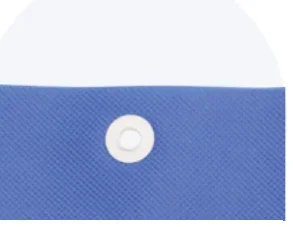
Etiquetas de autocontrolo e de privacidade termosseladas com um número de identificação único para rastreabilidade.
Reciclável e amigo do ambiente
Utilizamos entre 10 e 20 % de materiais reciclados no fabrico e, no fim da vida útil, o produto é reciclável até 100 %.
Hospitais e clínicas Unidades de saúde e consultas externas Lares e residências assistidas Blocos operatórios e unidades de doenças infecciosas
Precisa também de uma opção autónoma ou de parede? Veja os nossos biombos móveis e de parede.
Gama de cortinas
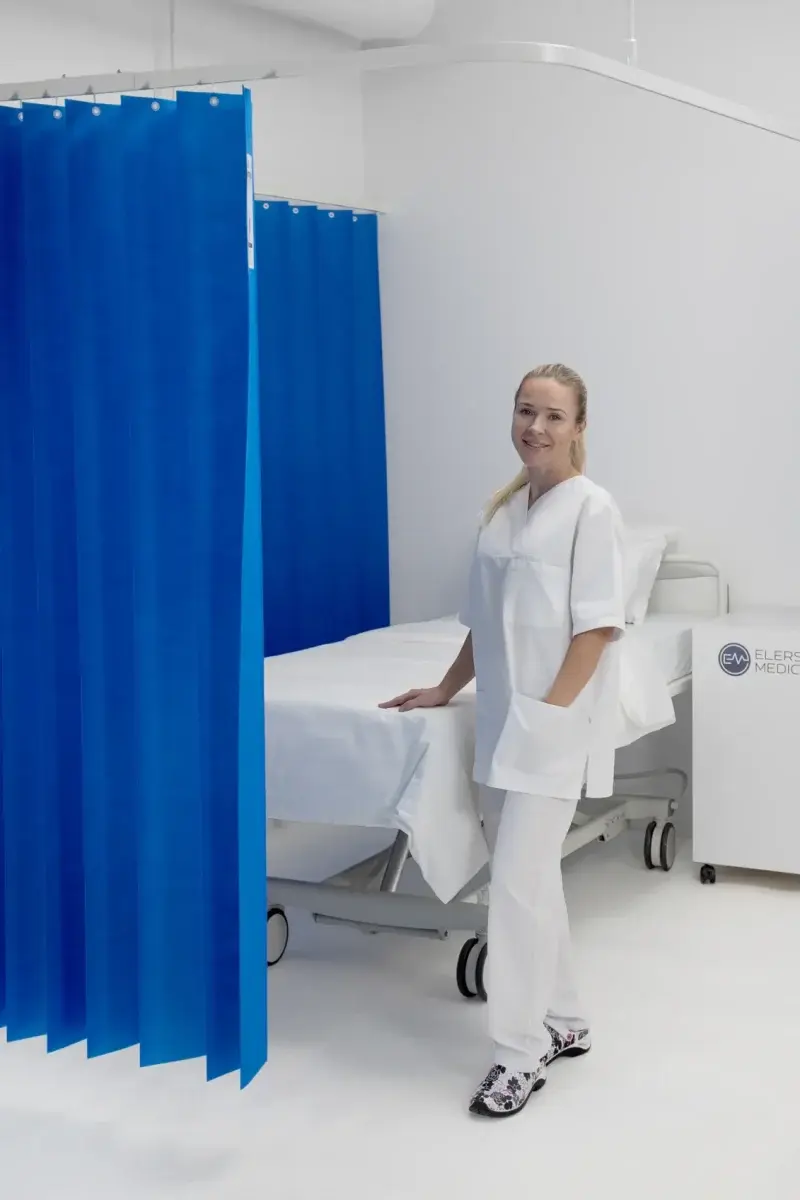
As cortinas divisórias ELERS MEDICAL® estão disponíveis com propriedades antimicrobianas ou como cortinas standard sem tratamento antimicrobiano. Ambas as opções têm as mesmas propriedades retardantes de chama durante todo o ciclo de vida. As cortinas existem numa vasta gama de tamanhos, cortes e cores, e há opções à medida mediante pedido.
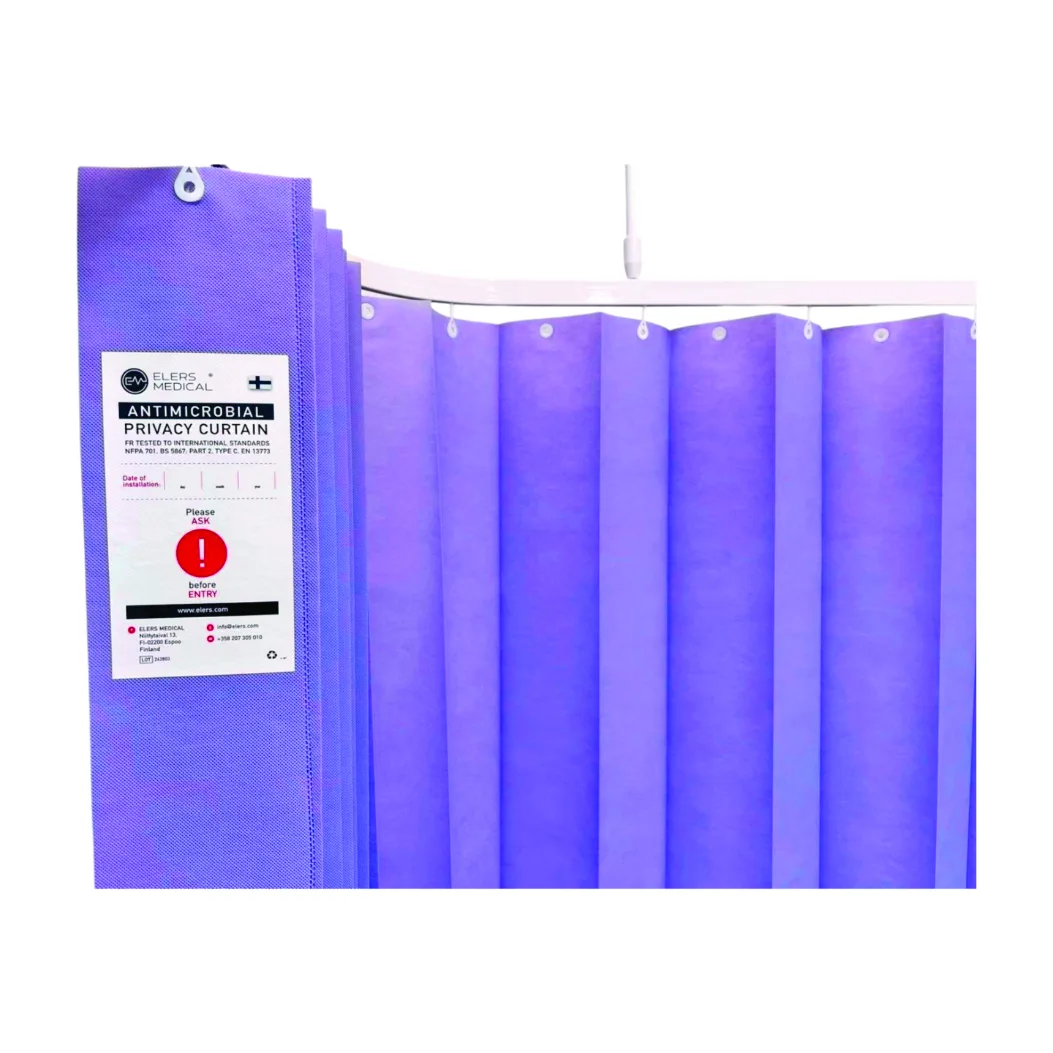
Para áreas onde a segurança do doente é primordial. A proteção antimicrobiana é incorporada no tecido não tecido durante o fabrico, e o material é testado segundo a ISO 20743:2021 contra o MRSA e outros organismos durante todo o ciclo de vida da cortina.
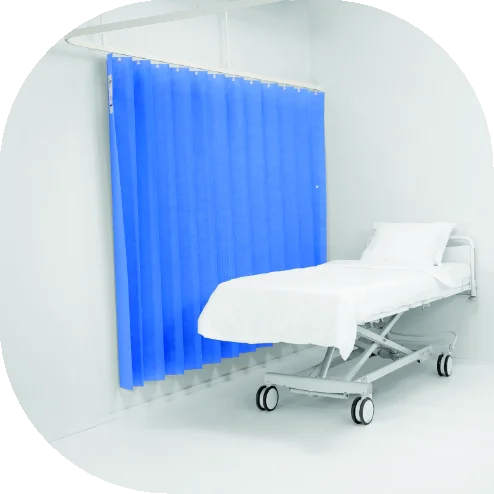
Uma cortina económica para áreas de menor risco e elevada rotação de doentes. Mesmos tamanhos, cores e comportamento ao fogo que a cortina antimicrobiana.
Cortina de cobertura total sem recortes nem partes em rede. 11 cores e o padrão de balões, todos disponíveis em versão antimicrobiana e standard.
As perfurações deixam o ar circular à volta da cama e permitem o funcionamento dos sprinklers de teto. Disponível em versão antimicrobiana e standard.
A escolha certa para calhas fixas ao teto. Disponível em versão antimicrobiana e standard.
Concebido e desenvolvido pela ELERS MEDICAL na Finlândia.
Cores e padrões standard
Todas as cores e o padrão de balões estão disponíveis como cortinas antimicrobianas e standard, nas versões de cobertura total, perfurada e com parte superior em rede. Existem cores e padrões à medida; aplicam-se quantidades mínimas de compra.
As cores no ecrã são indicativas. Peça-nos uma amostra de tecido antes de encomendar.
Guia de ganchos
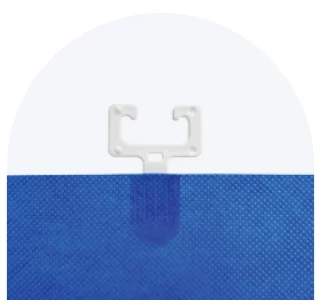
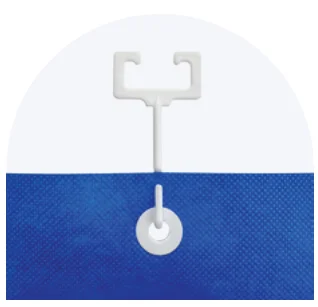
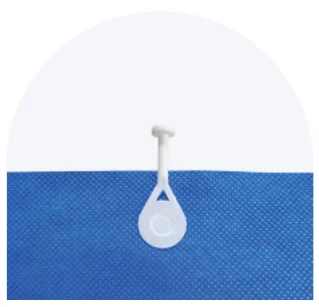
As cortinas ELERS MEDICAL são compatíveis com a maioria das calhas de cortina comuns em ambientes de saúde e podem ser fornecidas com gancho ou apenas com ilhó. A nossa gama de opções permite uma integração perfeita com os sistemas de ganchos e deslizadores existentes. Não sabe de qual precisa? Envie-nos a marca e o modelo da calha ou uma fotografia da calha e do gancho atual.
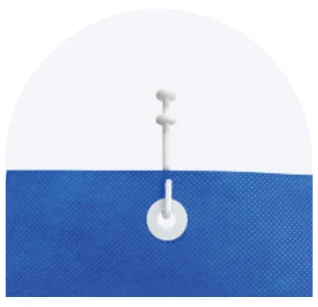
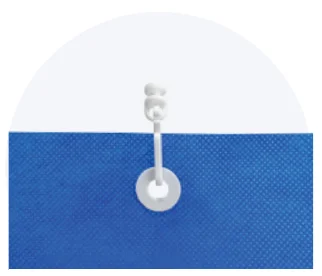
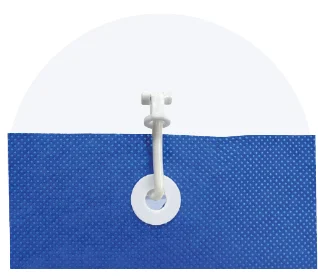
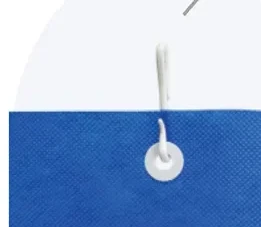
Tamanhos e embalagem
Meça o comprimento da calha que a cortina deve cobrir e escolha a cortina cuja largura útil corresponda. A largura útil tem em conta as pregas quando a cortina está pendurada.
| Largura \ altura | 2,0 m | 2,2 m | 2,4 m | 2,5 m | 2,6 m |
|---|---|---|---|---|---|
| 1.95 | 18 | 16 | 15 | 14 | 14 |
| 2.40 | 14 | 13 | 12 | 11 | 11 |
| 2.55 | 14 | 13 | 11 | 10 | 9 |
| 3.60 | 12 | 11 | 10 | 10 | 9 |
| 3.75 | 12 | 11 | 10 | 10 | 9 |
| 4.20 | 10 | 9 | 8 | 8 | 8 |
| 4.50 | 9 | 8 | 8 | 7 | 7 |
| 5.55 | 8 | 7 | 7 | 6 | 6 |
| 7.20 | 6 | 6 | 5 | 5 | 5 |
| 7.50 | 6 | 5 | 4 | 4 | 4 |
| Largura da cortina (m) | Largura útil aprox. (m) |
|---|---|
| 1.95 | 1.55 |
| 2.40 | 1.80 |
| 2.55 | 2.05 |
| 3.60 | 2.80 |
| 3.75 | 2.90 |
| 4.20 | 3.40 |
| 4.50 | 3.60 |
| 5.55 | 4.30 |
| 7.20 | 5.60 |
| 7.50 | 5.75 |
Outras alturas à medida mediante pedido. Peso da caixa aprox. 10,5 kg. Dimensões da caixa 120 × 16,5 × 40 cm.
Guia de instalação
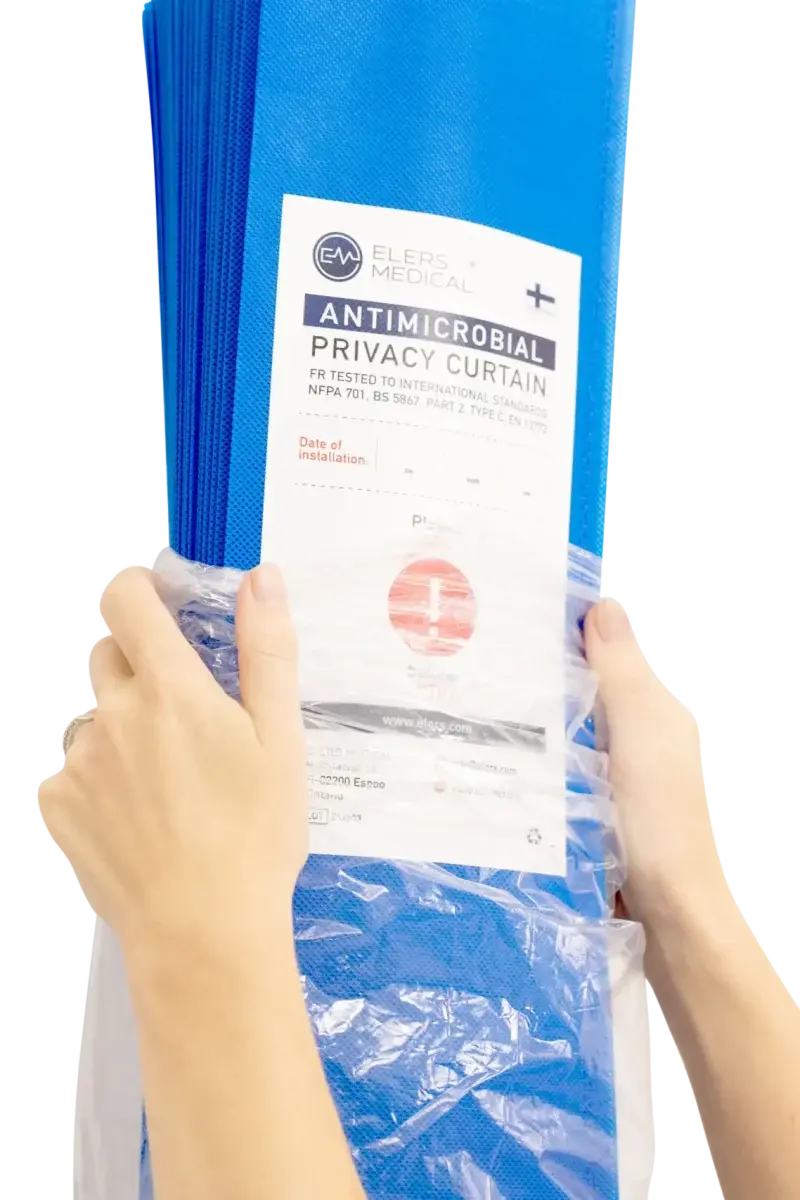
Puxe a capa de plástico para baixo para mostrar a etiqueta de autocontrolo e escreva a data de instalação.
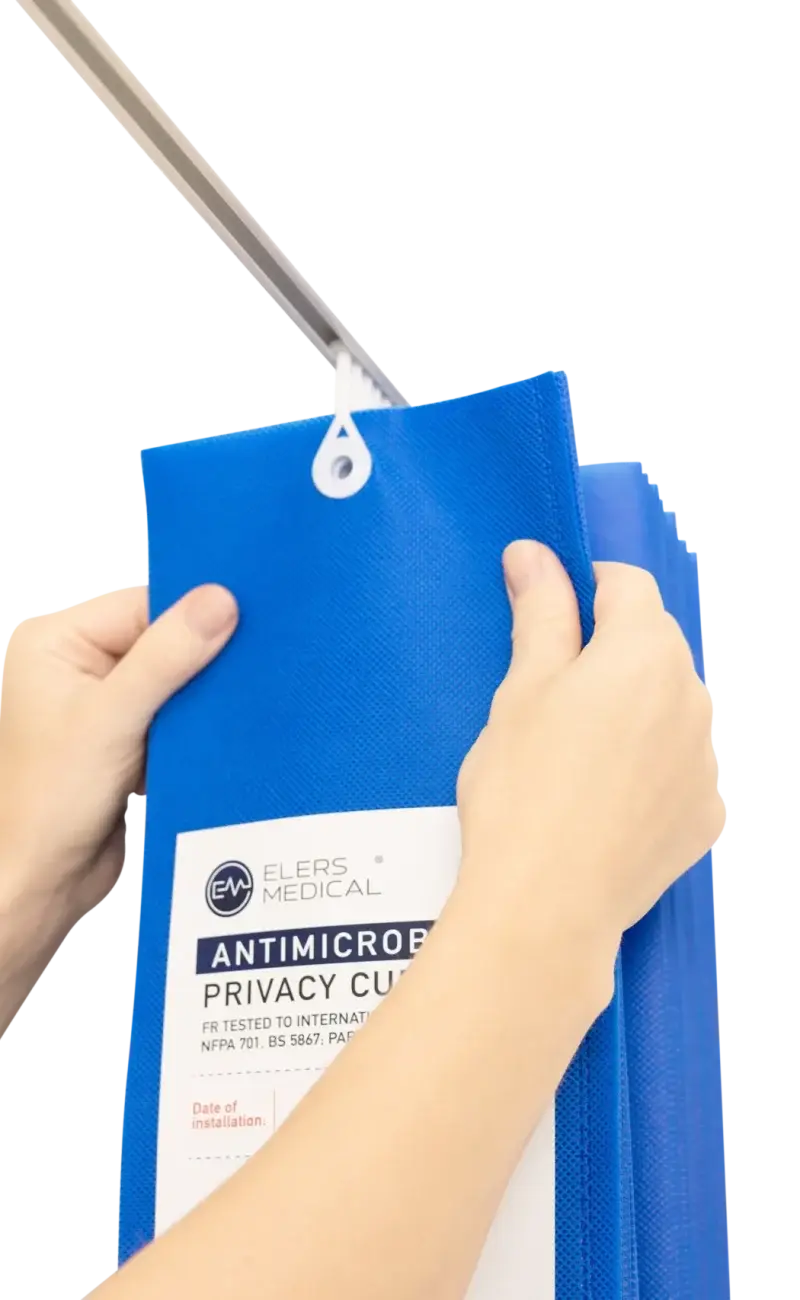
Coloque os ganchos diretamente na calha. As cortinas são fornecidas de acordo com as suas necessidades, com ganchos ou apenas com ilhós.
Retire totalmente a capa de plástico depois de pendurar a cortina.
Armazene as cortinas num local seco à temperatura ambiente normal, com a caixa na vertical.
Recomendamos substituir as cortinas a cada 6 a 12 meses, ou de imediato se ficarem visivelmente sujas ou contaminadas. As orientações do seu hospital definem o calendário final.
O tecido da cortina é polipropileno (PP) e os ganchos e ilhós são de plástico. As cortinas podem ser recicladas ou eliminadas segundo os protocolos locais do hospital.
Testado de forma independente
Testado segundo a ISO 20743:2021, o material antimicrobiano da cortina reduz uma vasta gama de agentes patogénicos em mais de log 3 (99,9 %).
Outros ensaios disponíveis mediante pedido.
Valor antibacteriano (A): 2 ≤ A < 3 significativo, A ≥ 3 forte. Ensaios realizados em condições laboratoriais. Resultados completos mediante pedido.
Retardante de chama durante toda a vida útil da cortina.
Investigação publicada
As cortinas divisórias são tocadas constantemente e raramente mudadas. Estes estudos revistos por pares mostram a rapidez com que as cortinas comuns ficam contaminadas e o que os materiais antimicrobianos à base de prata fazem quanto a isso.
“By day 3, test curtains showed increased microbial contamination (mean colony-forming units [CFU]/cm2 = 1.17) compared to control curtains (mean CFU/cm2 = 0.19). Test curtains became increasingly contaminated over time, with mean CFU/cm2 for days 17 and 21 of 1.86 and 5.11, respectively. By day 10, 1/8 test curtains tested positive for MRSA, and 5/8 were positive by day 14. Patient privacy curtains became progressively contaminated with bacteria, including MRSA. Between days 10 and 14 after being hung, curtains showed increased MRSA positivity. This may represent an opportune time to intervene, either by cleaning or replacing the curtains.”
“There was a statistically significant difference for the contact (t = 2.10, P =.047) and noncontact (t = 2.62, P =.016) rooms, with the edges having a significantly higher median than the middles. Pathogens such as methicillin-resistant Staphylococcus aureus, Enterococcus, Klebsiella, and Acinetobacter were found on the curtains, though at lower rates than in previous studies. Opportunistic fungi were also found on all curtains. Conclusions: Results of this study confirm that hospital curtains, most notably the edge but also the middle, are contaminated with pathogens, and that these areas are frequently touched by health care workers in between hand hygiene.”
“The cumulative contamination rate of the hospital privacy curtains increased over time (week 2: 15.6%, week 4: 37.0%, and week 8: 55%). Methicillin-resistant Staphylococcus aureus was not isolated from either the control or the hospital curtains during the study period. Vancomycin-resistant enterococci was not isolated from the control curtains but was isolated from 11.8% (4/34) of the hospital curtains. The contamination rate of the hospital curtains increased over time and showed a tendency to rise with an increase in the number of beds in a room.”
“Participants hands were heavily contaminated at baseline, in some cases with potentially pathogenic species. Half of the participants (n=30) acquired bacteria on their fingertips from handling curtains, illustrating that privacy curtains may be involved in the transmission of infection to emergency department patients.”
“In a culture survey (n=50), we found that 42% of hospital privacy curtains were contaminated with a antibiotic-resistant enterococci, 22% with methicillin-resistant Staphylococcus aureus, and 4% with Clostridium difficile. Hand imprint cultures demonstrated that these pathogens were easily acquired on hands. Hospital curtains are a potential source for dissemination of healthcare-associated pathogens.”
“From 32 curtains sampled, a total of 59 isolations were obtained, from those, 47 (79.6%) were considered potentially clinically relevant (Table 2), highlighting bacteria as Methicillin-resistant S. haemolyticus (MRSH), Methicillin-resistant S. cohnii (MRSC), MRSE, Methicillin-resistant S. saprophyticus (MRSS), Moraxella sp., Acinetobacter ursingii, AMP-C producer Pseudomonas oryzihabitans, Pantoea agglomerans, and Sphingomonas paucimobilis… There are significant opportunities to reduce patient exposure to frequently pathogenic bacteria in the hospital setting; patients are likely exposed to many bacteria through direct contact with white coats, curtains, and ties.”
“Twelve of 13 curtains (92%) placed during the study showed contamination within 1 week. Forty-one of 43 curtains (95%) demonstrated contamination on at least 1 occasion, including 21% with MRSA and 42% with VRE. Eight curtains yielded VRE at multiple time points: 3 with persistence of a single isolate type and 5 with different types, suggesting frequent recontamination. Privacy curtains are rapidly contaminated with potentially pathogenic bacteria.”
“Privacy curtain contamination on the burns/plastic surgery ward was determined for two separate occasions six months apart: 23 curtains on August 2015 and 26 curtains on January 2016… Curtain contamination in August 2015 was 0.7–4.7 cfu/cm2 with 22% testing positive for MRSA, whereas contamination on January 2016 was 0.6–13.3 cfu/cm2 with 31% of curtains testing positive for MRSA. Curtains on the burns/plastic surgery ward become colonized with significant quantities of bacteria.”
“Environmental screening revealed the presence of the multiple-resistant Acinetobacter species on fomite surfaces in the intensive care unit and bed linen. The major source appeared to be the curtains surrounding patients' beds. Typing by pulsed field gel electrophoresis demonstrated that the patients' isolates and those from the environment were indistinguishable… This outbreak also highlights environmental sources, particularly dry fabrics such as curtains, as an important reservoir for dissemination of acinetobacters.”
“The purpose of this study was to determine the survival of 22 gram-positive bacteria (vancomycin-sensitive and -resistant enterococci and methicillin-sensitive and -resistant staphylococci) on five common hospital materials: smooth 100% cotton (clothing), 100% cotton terry (towels), 60% cotton–40% polyester blend (scrub suits and lab coats), 100% polyester (privacy drapes), and 100% polypropylene plastic (splash aprons)… All isolates survived for at least 1 day, and some survived for more than 90 days on the various materials… The long survival of these bacteria, including MRSA and VRE, on commonly used hospital fabrics, such as scrub suits, lab coats, and hospital privacy drapes, underscores the need for meticulous contact control procedures and careful disinfection to limit the spread of these bacteria.”
“Curtains in the experimental group demonstrated significantly lower bacterial contamination than controls at all time points (P < .001). Peak contamination in the control group reached 2.1 CFU/cm² at day 30, whereas experimental curtains maintained contamination below 0.2 CFU/cm² throughout. Cost analysis revealed a 59.42% reduction in cumulative curtain-related expenditures in the experimental group. Antimicrobial disposable curtains offer superior microbial control and substantial cost savings. Integration of such curtains into infection prevention protocols may enhance environmental hygiene and resource optimization in critical care settings.”
“Bacteria were exposed to the silver ion solution for various lengths of time, and the antibacterial effect of the solution was tested… Reductions of more than 5 log10 CFU/ml of both S. aureus and E. coli bacteria were confirmed after 90 min of treatment with the silver ion solution. Significant reduction of S. aureus and E. coli cells was also observed by FC analysis… In conclusion, the results of the present study suggest that silver ions may cause S. aureus and E. coli bacteria to reach an ABNC state and eventually die.”
“A declining pipeline of clinically useful antibiotics has made it imperative to develop more effective antimicrobial therapies, particularly against difficult-to-treat Gram-negative pathogens. Silver has been used as an antimicrobial since antiquity, yet its mechanism of action remains unclear. We show that silver disrupts multiple bacterial cellular processes, including disulfide bond formation, metabolism, and iron homeostasis. These changes lead to increased production of reactive oxygen species and increased membrane permeability of Gram-negative bacteria that can potentiate the activity of a broad range of antibiotics against Gram-negative bacteria in different metabolic states, as well as restore antibiotic susceptibility to a resistant bacterial strain… This work shows that silver can be used to enhance the action of existing antibiotics against Gram-negative bacteria, thus strengthening the antibiotic arsenal for fighting bacterial infections.”
“The resulting silver sulfadiazine–immobilized celluloses provided a 6-log reduction of 10^8 CFU mL−1 of Staphylococcus aureus (Gram-positive bacteria), Escherichia coli (Gram-negative bacteria), methicillin-resistant Staphylococcus aureus (drug-resistant bacteria), vancomycin-resistant Enterococcus faecium (drug-resistant bacteria), and Candida albicans (fungi) in 30–60 minutes, and a 5-log reduction of 10^7 PFU mL−1 of MS2 virus in 120 minutes. The antibacterial, antifungal, and antiviral activities were both durable and rechargeable. Additionally, trypan blue assay suggested that the new silver sulfadiazine–immobilized celluloses sustained excellent mammal cell viability, pointing to great potentials of the new materials for a broad range of health care–related applications.”
ELERS MEDICAL®
A Elers Medical Finland Oy tem dois certificados de sistemas de gestão: ISO 9001:2015 e ISO 14001:2015 de gestão ambiental.
Meça o comprimento da calha que pretende cobrir e utilize a largura útil quando pendurada para escolher uma cortina que cubra o suficiente com as pregas. As larguras standard vão de 1,95 m a 7,50 m e as alturas de 2,0 m a 2,6 m. Uma cortina de 1,95 m cobre cerca de 1,55 m de calha e uma de 7,50 m cerca de 5,75 m. Existem larguras e alturas à medida mediante pedido; podem aplicar-se quantidades mínimas e prazos de entrega mais longos.
As cortinas ELERS MEDICAL adaptam-se à maioria dos sistemas de calhas hospitalares com o gancho adequado. Existe uma opção apenas com ilhós para utilização com ganchos existentes compatíveis. Se não tiver a certeza de que fixação encomendar, envie-nos a marca e o modelo da calha ou uma fotografia da calha e do gancho existente, e ajudamos a identificar a fixação correta.
Sim. A ELERS MEDICAL utiliza um aditivo retardante de chama sem halogéneos no tecido das cortinas. A documentação sobre o comportamento ao fogo está disponível mediante pedido, incluindo resultados de ensaio segundo a BS 5867-2:2008 Type C e a NFPA 701, e a classificação segundo a EN 13773.
O tratamento foi concebido para inibir o crescimento bacteriano no tecido da cortina. O tecido foi testado segundo a ISO 20743, um método de ensaio internacional para medir a atividade antibacteriana em têxteis. A documentação dos ensaios está disponível mediante pedido.
A ELERS MEDICAL recomenda substituir as cortinas a cada 6 a 12 meses, ou antes se a política de prevenção e controlo de infeção do seu hospital o exigir. Siga o calendário local de substituição de cada área clínica. Substitua as cortinas de imediato se ficarem visivelmente contaminadas com sangue ou outros fluidos corporais.
Cada cortina tem uma etiqueta de autocontrolo na prega da frente, onde os profissionais podem registar a data em que foi pendurada. Com essa data é possível verificar quando a cortina foi mudada pela última vez e calcular quando deve ser feita a próxima substituição de rotina.
A gama inclui Pacific Blue, Summer Blue, Light Blue, Light Green, Pastel Yellow, Latte, Forest Green, Battleship Grey, Lilac, Pink, Branco e o padrão de balões. Outras cores podem estar disponíveis mediante pedido, sujeitas a quantidades mínimas e prazos de entrega.
Siga a política de resíduos do seu hospital e os procedimentos locais de prevenção e controlo de infeção ao retirar e eliminar cortinas usadas, e utilize-os para determinar o fluxo de resíduos adequado, por exemplo resíduos hospitalares perigosos ou resíduos equiparados a urbanos. O tecido da cortina é 100 % polipropileno. A possibilidade de reciclar uma cortina usada depende da sua classificação como resíduo e do que o seu operador de resíduos ou a política local de controlo de infeção determinar.
Diga-nos de que cortinas precisa e enviamos-lhe um orçamento.