Чистота
Антибактериальные шторы ELERS MEDICAL производятся с проверенной антимикробной добавкой, введённой в волокна, которая помогает снизить бактериальную нагрузку на поверхности ткани. Эффективность ткани доказана против многих микроорганизмов, таких как MRSA, Staphylococcus aureus, Klebsiella pneumoniae и Escherichia coli, а эффективность штор независимо подтверждена испытаниями по международно признанному стандарту для антимикробного текстиля ISO 20743:2021. Полный ассортимент
Как антибактериальные, так и стандартные шторы (без обработки) доступны в широком выборе размеров и цветов. Поддержка устойчивого развития Больше никаких долгих процессов стирки, расходующих воду и моющие средства.
Научная основа больничных штор: 14 опубликованных исследований
Безопасность
Безопаснее для пациентов, персонала и посетителей. Шторы соответствуют требованиям REACH и ECHA и зарегистрированы в соответствии с ними, а также в EPA (США). Производятся в рамках сертифицированной системы менеджмента качества ISO 9001:2015 и системы экологического менеджмента ISO 14001:2015.
Простая и быстрая замена
Одноразовые шторы улучшают больничную гигиену без процессов стирки, экономя время и ресурсы. Доступен широкий выбор подвесных систем, совместимых с большинством распространённых карнизов.
Экономичное решение
Одноразовые шторы заменяются, а не стираются, поэтому не нужно стирать, сушить и хранить многоразовые шторы.
Экономически эффективно
Без стирки и дорогих первоначальных капиталовложений. Значительная экономия по сравнению с традиционными тканевыми шторами.
Международные сертификаты огнезащиты (FR)
Как антибактериальные, так и стандартные шторы для палат изначально огнезащитные (FR), и их огнезащитные свойства сохраняются в течение всего жизненного цикла изделия. Огнезащитные свойства испытаны по стандартам EN 13773, BS 5867: Part 2 Type C и NFPA 701.
Простая прослеживаемость
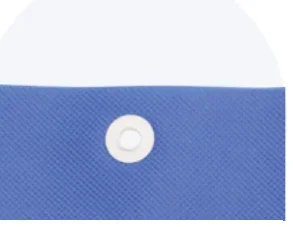
Термозапаянные этикетки для самоконтроля и маркировки с уникальным идентификационным номером для прослеживаемости.
Перерабатываемый и экологичный
Мы используем в производстве от 10 до 20 % переработанных материалов, а по окончании срока службы изделие может быть переработано до 100 %.
Больницы и клиники Медицинские учреждения и поликлиники Дома престарелых и учреждения с уходом Операционные и инфекционные отделения
Нужен также отдельно стоящий или настенный вариант? Смотрите наши ширмы на колёсах и настенные ширмы.
Ассортимент штор
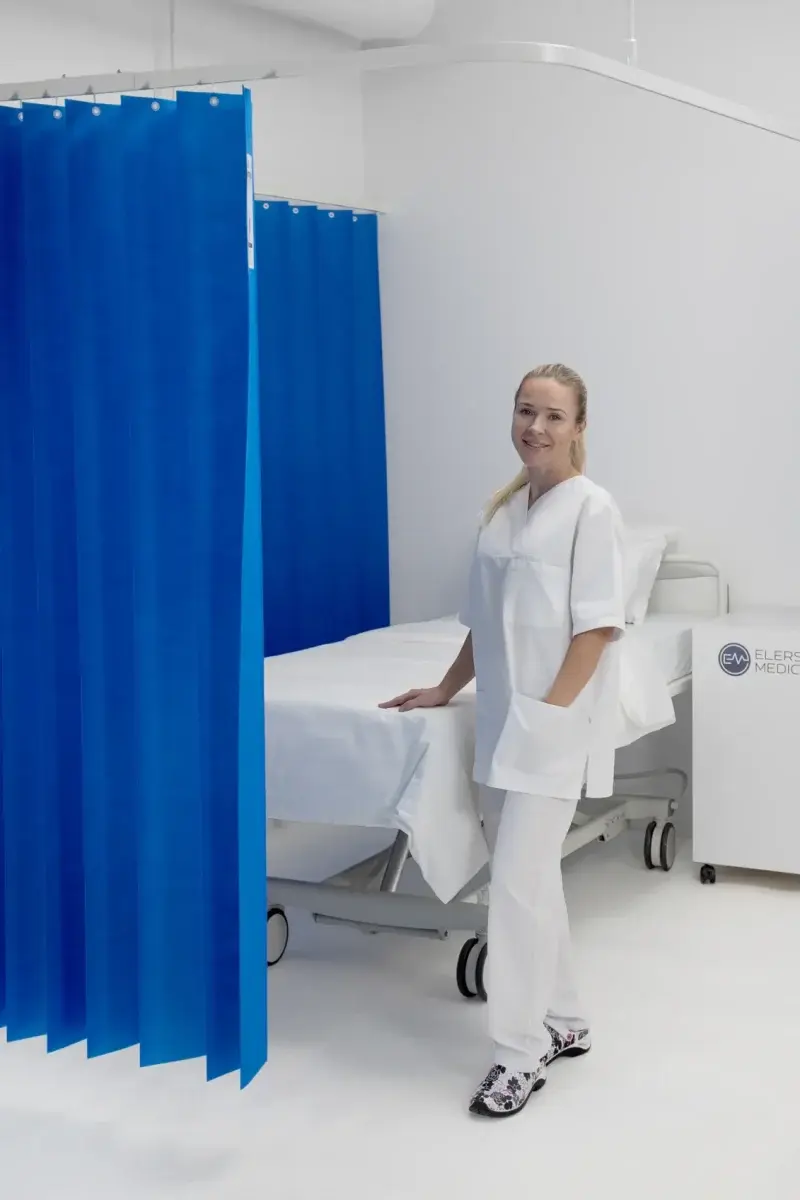
Шторы для палат ELERS MEDICAL® доступны с антибактериальными свойствами или в стандартном исполнении без антибактериальной обработки. Оба варианта сохраняют одинаковые огнезащитные свойства на протяжении всего жизненного цикла. Шторы выпускаются в широком выборе размеров, кроев и цветов, индивидуальные варианты доступны по запросу.
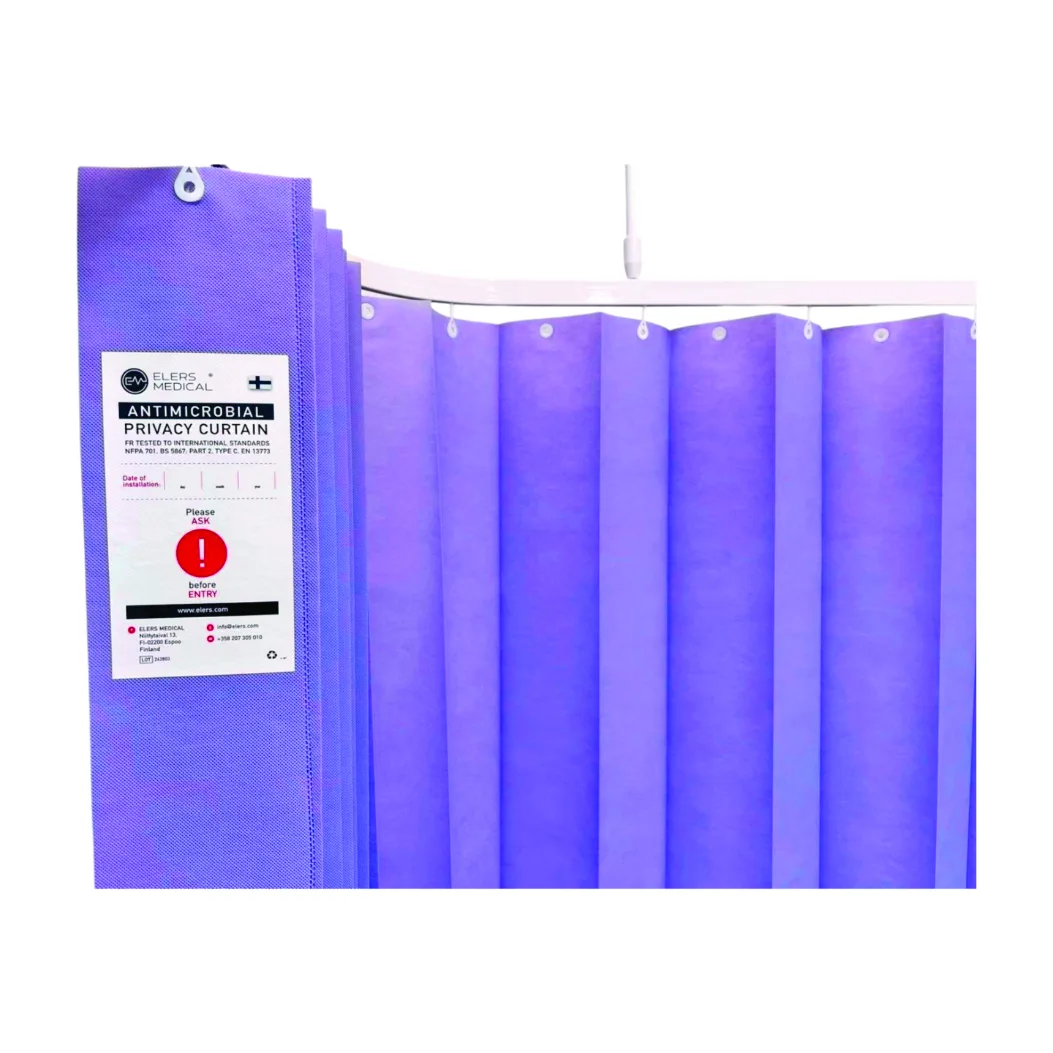
Для зон, где безопасность пациентов имеет первостепенное значение. Антимикробная защита встраивается в нетканый материал на этапе производства, а материал испытан по ISO 20743:2021 против MRSA и других микроорганизмов на протяжении всего жизненного цикла шторы.
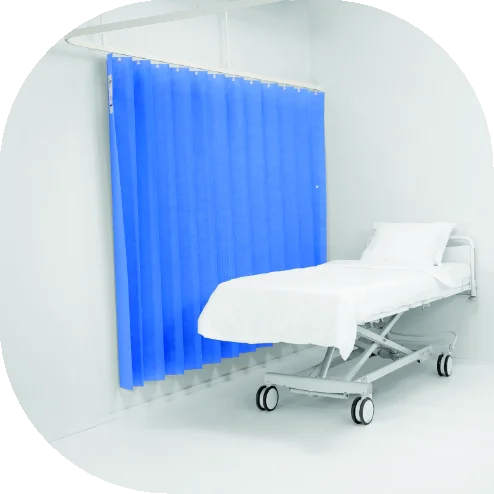
Недорогая штора для зон с пониженным риском и высокой сменяемостью пациентов. Те же размеры, цвета и огнезащитные характеристики, что и у антибактериальной шторы.
Сплошная штора без вырезов и сетчатых вставок. 11 цветов и принт с воздушными шарами, все доступны в антибактериальном и стандартном исполнении.
Перфорация обеспечивает циркуляцию воздуха вокруг койки и позволяет работать потолочным спринклерным системам. Доступны в антибактериальном и стандартном исполнении.
Правильный выбор для потолочных карнизов. Доступны в антибактериальном и стандартном исполнении.
Разработано и создано ELERS MEDICAL в Финляндии.
Стандартные цвета и принты
Каждый цвет и принт с воздушными шарами доступны в антибактериальном и стандартном исполнении: сплошные, перфорированные и с сетчатым верхом. Индивидуальные цвета и принты доступны; действует минимальный объём заказа.
Цвета на экране являются ориентировочными. Перед заказом запросите у нас образец ткани.
Руководство по крючкам
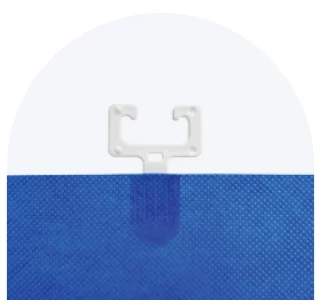
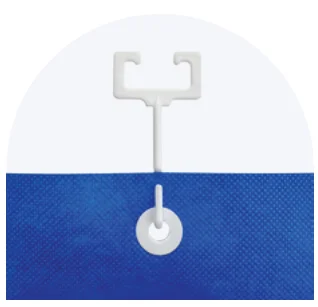
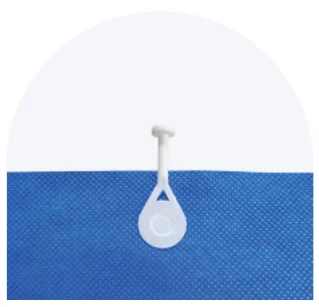
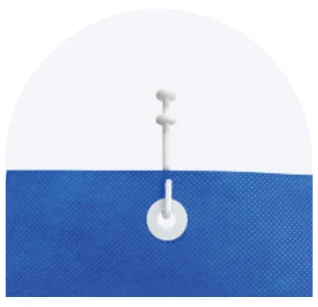
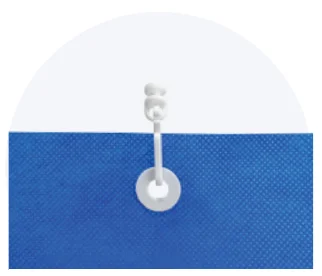
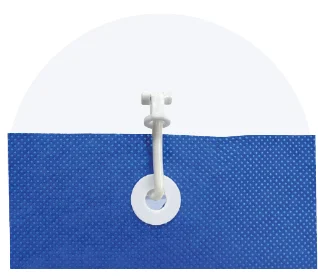
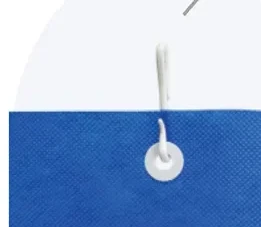
Шторы ELERS MEDICAL совместимы с большинством карнизов, применяемых в медицинских учреждениях, и поставляются с крючками или только с люверсами. Наш ассортимент позволяет легко интегрировать шторы в существующие системы крючков и бегунков. Не знаете, что вам нужно? Пришлите нам марку и модель карниза или фото карниза и текущего крючка.
Размеры и упаковка
Измерьте длину карниза, которую должна закрывать штора, и выберите штору с соответствующей полезной шириной. Полезная ширина учитывает складки повешенной шторы.
| Ширина \ высота | 2,0 м | 2,2 м | 2,4 м | 2,5 м | 2,6 м |
|---|---|---|---|---|---|
| 1.95 | 18 | 16 | 15 | 14 | 14 |
| 2.40 | 14 | 13 | 12 | 11 | 11 |
| 2.55 | 14 | 13 | 11 | 10 | 9 |
| 3.60 | 12 | 11 | 10 | 10 | 9 |
| 3.75 | 12 | 11 | 10 | 10 | 9 |
| 4.20 | 10 | 9 | 8 | 8 | 8 |
| 4.50 | 9 | 8 | 8 | 7 | 7 |
| 5.55 | 8 | 7 | 7 | 6 | 6 |
| 7.20 | 6 | 6 | 5 | 5 | 5 |
| 7.50 | 6 | 5 | 4 | 4 | 4 |
| Ширина шторы (м) | Полезная ширина, прибл. (м) |
|---|---|
| 1.95 | 1.55 |
| 2.40 | 1.80 |
| 2.55 | 2.05 |
| 3.60 | 2.80 |
| 3.75 | 2.90 |
| 4.20 | 3.40 |
| 4.50 | 3.60 |
| 5.55 | 4.30 |
| 7.20 | 5.60 |
| 7.50 | 5.75 |
Другие высоты по запросу. Вес коробки ок. 10,5 кг. Размеры коробки 120 × 16,5 × 40 см.
Инструкция по установке
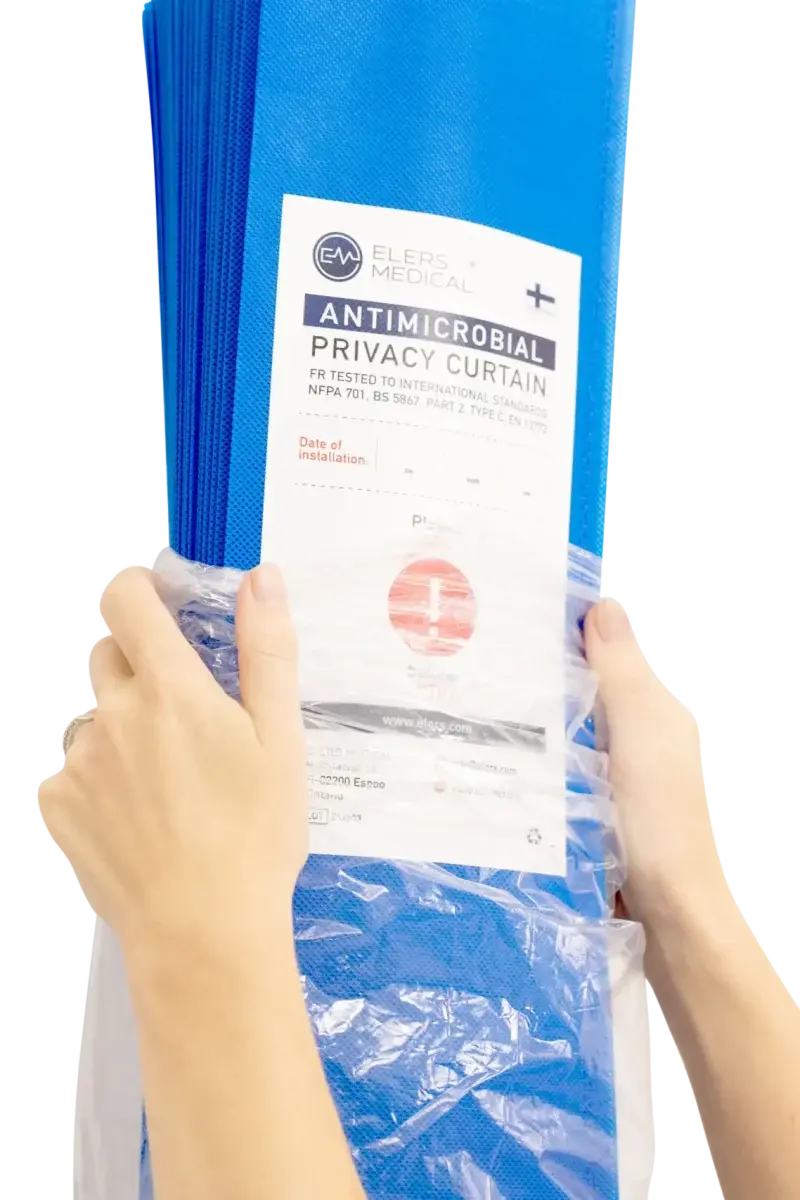
Опустите пластиковый чехол, чтобы открыть этикетку для самоконтроля, и запишите дату установки.
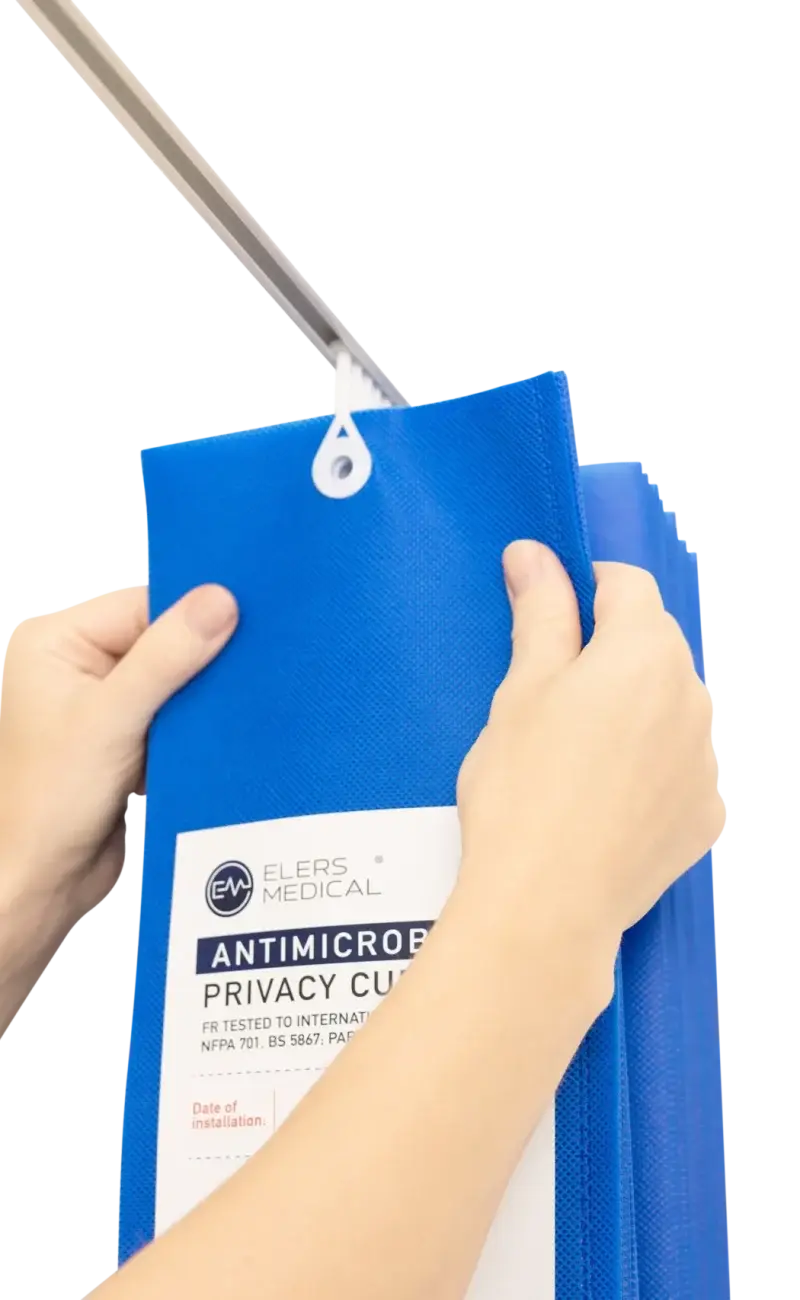
Установите крючки прямо на карниз. Шторы поставляются по вашим требованиям: с крючками или только с люверсами.
Полностью снимите пластиковый чехол после того, как штора повешена.
Храните шторы в сухом месте при обычной комнатной температуре, коробку держите вертикально.
Мы рекомендуем менять шторы каждые 6–12 месяцев или сразу, если они заметно загрязнены или контаминированы. Окончательный график определяется внутренними правилами вашей больницы.
Ткань штор изготовлена из полипропилена (PP), а крючки и люверсы из пластика. Шторы можно перерабатывать или утилизировать согласно местным больничным протоколам.
Независимые испытания
Испытанный по ISO 20743:2021 антибактериальный материал штор снижает количество широкого спектра патогенов более чем на log 3 (99,9 %).
Дополнительные испытания по запросу.
Антибактериальное значение (A): 2 ≤ A < 3: значительное, A ≥ 3: сильное. Испытания проведены в лабораторных условиях. Полные результаты по запросу.
Огнезащитные свойства на весь срок службы шторы.
Опубликованные исследования
Шторы для палат постоянно трогают и редко меняют. Эти рецензируемые исследования показывают, как быстро обычные шторы становятся контаминированными и что с этим делают антимикробные материалы на основе серебра.
“By day 3, test curtains showed increased microbial contamination (mean colony-forming units [CFU]/cm2 = 1.17) compared to control curtains (mean CFU/cm2 = 0.19). Test curtains became increasingly contaminated over time, with mean CFU/cm2 for days 17 and 21 of 1.86 and 5.11, respectively. By day 10, 1/8 test curtains tested positive for MRSA, and 5/8 were positive by day 14. Patient privacy curtains became progressively contaminated with bacteria, including MRSA. Between days 10 and 14 after being hung, curtains showed increased MRSA positivity. This may represent an opportune time to intervene, either by cleaning or replacing the curtains.”
“There was a statistically significant difference for the contact (t = 2.10, P =.047) and noncontact (t = 2.62, P =.016) rooms, with the edges having a significantly higher median than the middles. Pathogens such as methicillin-resistant Staphylococcus aureus, Enterococcus, Klebsiella, and Acinetobacter were found on the curtains, though at lower rates than in previous studies. Opportunistic fungi were also found on all curtains. Conclusions: Results of this study confirm that hospital curtains, most notably the edge but also the middle, are contaminated with pathogens, and that these areas are frequently touched by health care workers in between hand hygiene.”
“The cumulative contamination rate of the hospital privacy curtains increased over time (week 2: 15.6%, week 4: 37.0%, and week 8: 55%). Methicillin-resistant Staphylococcus aureus was not isolated from either the control or the hospital curtains during the study period. Vancomycin-resistant enterococci was not isolated from the control curtains but was isolated from 11.8% (4/34) of the hospital curtains. The contamination rate of the hospital curtains increased over time and showed a tendency to rise with an increase in the number of beds in a room.”
“Participants hands were heavily contaminated at baseline, in some cases with potentially pathogenic species. Half of the participants (n=30) acquired bacteria on their fingertips from handling curtains, illustrating that privacy curtains may be involved in the transmission of infection to emergency department patients.”
“In a culture survey (n=50), we found that 42% of hospital privacy curtains were contaminated with a antibiotic-resistant enterococci, 22% with methicillin-resistant Staphylococcus aureus, and 4% with Clostridium difficile. Hand imprint cultures demonstrated that these pathogens were easily acquired on hands. Hospital curtains are a potential source for dissemination of healthcare-associated pathogens.”
“From 32 curtains sampled, a total of 59 isolations were obtained, from those, 47 (79.6%) were considered potentially clinically relevant (Table 2), highlighting bacteria as Methicillin-resistant S. haemolyticus (MRSH), Methicillin-resistant S. cohnii (MRSC), MRSE, Methicillin-resistant S. saprophyticus (MRSS), Moraxella sp., Acinetobacter ursingii, AMP-C producer Pseudomonas oryzihabitans, Pantoea agglomerans, and Sphingomonas paucimobilis… There are significant opportunities to reduce patient exposure to frequently pathogenic bacteria in the hospital setting; patients are likely exposed to many bacteria through direct contact with white coats, curtains, and ties.”
“Twelve of 13 curtains (92%) placed during the study showed contamination within 1 week. Forty-one of 43 curtains (95%) demonstrated contamination on at least 1 occasion, including 21% with MRSA and 42% with VRE. Eight curtains yielded VRE at multiple time points: 3 with persistence of a single isolate type and 5 with different types, suggesting frequent recontamination. Privacy curtains are rapidly contaminated with potentially pathogenic bacteria.”
“Privacy curtain contamination on the burns/plastic surgery ward was determined for two separate occasions six months apart: 23 curtains on August 2015 and 26 curtains on January 2016… Curtain contamination in August 2015 was 0.7–4.7 cfu/cm2 with 22% testing positive for MRSA, whereas contamination on January 2016 was 0.6–13.3 cfu/cm2 with 31% of curtains testing positive for MRSA. Curtains on the burns/plastic surgery ward become colonized with significant quantities of bacteria.”
“Environmental screening revealed the presence of the multiple-resistant Acinetobacter species on fomite surfaces in the intensive care unit and bed linen. The major source appeared to be the curtains surrounding patients' beds. Typing by pulsed field gel electrophoresis demonstrated that the patients' isolates and those from the environment were indistinguishable… This outbreak also highlights environmental sources, particularly dry fabrics such as curtains, as an important reservoir for dissemination of acinetobacters.”
“The purpose of this study was to determine the survival of 22 gram-positive bacteria (vancomycin-sensitive and -resistant enterococci and methicillin-sensitive and -resistant staphylococci) on five common hospital materials: smooth 100% cotton (clothing), 100% cotton terry (towels), 60% cotton–40% polyester blend (scrub suits and lab coats), 100% polyester (privacy drapes), and 100% polypropylene plastic (splash aprons)… All isolates survived for at least 1 day, and some survived for more than 90 days on the various materials… The long survival of these bacteria, including MRSA and VRE, on commonly used hospital fabrics, such as scrub suits, lab coats, and hospital privacy drapes, underscores the need for meticulous contact control procedures and careful disinfection to limit the spread of these bacteria.”
“Curtains in the experimental group demonstrated significantly lower bacterial contamination than controls at all time points (P < .001). Peak contamination in the control group reached 2.1 CFU/cm² at day 30, whereas experimental curtains maintained contamination below 0.2 CFU/cm² throughout. Cost analysis revealed a 59.42% reduction in cumulative curtain-related expenditures in the experimental group. Antimicrobial disposable curtains offer superior microbial control and substantial cost savings. Integration of such curtains into infection prevention protocols may enhance environmental hygiene and resource optimization in critical care settings.”
“Bacteria were exposed to the silver ion solution for various lengths of time, and the antibacterial effect of the solution was tested… Reductions of more than 5 log10 CFU/ml of both S. aureus and E. coli bacteria were confirmed after 90 min of treatment with the silver ion solution. Significant reduction of S. aureus and E. coli cells was also observed by FC analysis… In conclusion, the results of the present study suggest that silver ions may cause S. aureus and E. coli bacteria to reach an ABNC state and eventually die.”
“A declining pipeline of clinically useful antibiotics has made it imperative to develop more effective antimicrobial therapies, particularly against difficult-to-treat Gram-negative pathogens. Silver has been used as an antimicrobial since antiquity, yet its mechanism of action remains unclear. We show that silver disrupts multiple bacterial cellular processes, including disulfide bond formation, metabolism, and iron homeostasis. These changes lead to increased production of reactive oxygen species and increased membrane permeability of Gram-negative bacteria that can potentiate the activity of a broad range of antibiotics against Gram-negative bacteria in different metabolic states, as well as restore antibiotic susceptibility to a resistant bacterial strain… This work shows that silver can be used to enhance the action of existing antibiotics against Gram-negative bacteria, thus strengthening the antibiotic arsenal for fighting bacterial infections.”
“The resulting silver sulfadiazine–immobilized celluloses provided a 6-log reduction of 10^8 CFU mL−1 of Staphylococcus aureus (Gram-positive bacteria), Escherichia coli (Gram-negative bacteria), methicillin-resistant Staphylococcus aureus (drug-resistant bacteria), vancomycin-resistant Enterococcus faecium (drug-resistant bacteria), and Candida albicans (fungi) in 30–60 minutes, and a 5-log reduction of 10^7 PFU mL−1 of MS2 virus in 120 minutes. The antibacterial, antifungal, and antiviral activities were both durable and rechargeable. Additionally, trypan blue assay suggested that the new silver sulfadiazine–immobilized celluloses sustained excellent mammal cell viability, pointing to great potentials of the new materials for a broad range of health care–related applications.”
ELERS MEDICAL®
Elers Medical Finland Oy имеет два сертификата: ISO 9001:2015 и ISO 14001:2015 (системы экологического менеджмента).
Измерьте длину карниза, которую должна закрывать штора, и по полезной ширине в повешенном виде выберите штору, которая с учётом складок обеспечит достаточное покрытие. Стандартная ширина составляет от 1,95 до 7,50 м, высота от 2,0 до 2,6 м. Штора шириной 1,95 м закрывает около 1,55 м карниза, а штора шириной 7,50 м около 5,75 м. Индивидуальная ширина и высота доступны по запросу; могут действовать минимальный объём заказа и более длительные сроки поставки.
Шторы ELERS MEDICAL подходят к большинству больничных карнизов при использовании соответствующего крючка. Вариант только с люверсами доступен для использования с совместимыми существующими крючками. Если вы не уверены, какое крепление заказать, пришлите нам марку и модель карниза или фото карниза и текущего крючка, и мы поможем подобрать нужное крепление.
Да. ELERS MEDICAL использует в ткани штор безгалогенную огнезащитную добавку. Документация по пожарной безопасности предоставляется по запросу, включая результаты испытаний по BS 5867-2:2008 Type C и NFPA 701 и классификацию по EN 13773.
Обработка предназначена для подавления роста бактерий на ткани шторы. Ткань испытана по ISO 20743, международному методу измерения антибактериальной активности текстиля. Документация по испытаниям предоставляется по запросу.
ELERS MEDICAL рекомендует менять шторы каждые 6–12 месяцев или чаще, если этого требуют правила инфекционного контроля вашей больницы. Соблюдайте местный график замены для каждого клинического отделения. Немедленно заменяйте шторы при видимом загрязнении кровью или другими биологическими жидкостями.
На передней складке каждой шторы есть этикетка для самоконтроля, на которой персонал записывает дату установки. По этой дате можно проверить, когда штора была заменена в последний раз, и определить срок следующей плановой замены.
Ассортимент включает Pacific Blue, Summer Blue, Light Blue, Light Green, Pastel Yellow, Latte, Forest Green, Battleship Grey, Lilac, Pink, White и принт с воздушными шарами. Другие цвета могут быть доступны по запросу с учётом минимального объёма заказа и сроков поставки.
При снятии и утилизации использованных штор соблюдайте правила обращения с отходами вашей больницы и местные процедуры инфекционного контроля и на их основе определяйте категорию отходов, например медицинские или бытовые. Ткань штор на 100 % состоит из полипропилена. Возможность переработки использованной шторы зависит от её классификации как отхода и требований вашего подрядчика по вывозу отходов или местной политики инфекционного контроля.
Сообщите, какие шторы вам нужны, и мы свяжемся с вами с предложением.